


Indonesia is a country prone to disasters, including earthquakes, due to its location at the confluence of three of the world's tectonic plates. Earthquakes can strike at any time without warning, posing a high risk to human safety, especially for children. Children have limited capacity to understand emergency situations, react quickly, and make informed decisions, making them one of the most vulnerable groups during disasters. Without adequate knowledge and skills, the risk of injury, trauma, and even death is greater.
Earthquake disaster mitigation for children is a series of efforts to reduce the risks and impacts children may experience during an earthquake, through education, training, and preparation tailored to their age and abilities. In addition to providing physical protection, disaster mitigation for children also plays a role in maintaining their mental health. Children who are trained to deal with emergency situations will gain self-confidence and reduce the potential for post-disaster trauma.
Furthermore, they can become agents of change in their communities by sharing their knowledge and skills with their family and friends.
Thus, disaster mitigation activities for children not only save lives but also build a sustainable culture of disaster awareness in the community.
This is what prompted the Disaster Communication Lecturer Team in the Communication Studies Program at the Faculty of Social and Political Sciences, University of North Sumatra (USU), Dr. Emilia Ramadhani, S.Sos, M.A., and Prof. Dewi Kurniawati, M.Si, PhD, to choose the theme "Introduction and Simulation of Disaster Mitigation for Children" for this year's Community Service activity. This activity also involved students so they could apply the knowledge they gained in lectures to the community. The introduction and disaster mitigation simulation took place at Ar-Rahman Kindergarten, Tadukan Raga Village, STM Hilir District, Delieerdang, on Tuesday (August 12, 2025).
The Head of the Community Service Team, Dr. Emilia Ramadhani, S.Sos, M.A., stated that disaster mitigation, especially for children, is a strategic step in reducing the negative impact of earthquakes.
By communicating appropriately and age-appropriately, children can understand danger signs, self-rescue steps, and simple evacuation procedures.
This disaster mitigation activity was conducted using educational games, songs, and videos to make it engaging, fun, and easier for children to understand. The tagline was: "Who Am I? I'm Earthquake Alert!"
The mitigation material was delivered by students Muhammad Khalish, Heflin Laurensia, and Theodora Stephanie. It began with an introduction to earthquakes for kindergarten children, followed by self-evacuation exercises (lying down, holding your head, and getting under a table), and a simulation practice involving walking out of the room with your bag on your head while holding a friend's shoulder, following the evacuation route, avoiding danger, and heading to the assembly point.
During the exercises and simulations, the student team maintained mental strength by maintaining a sense of calm, avoiding panic, not pushing friends, and supporting each other.
The entire simulation was documented by the documentation team, M. Syafiq Al Fallah and M. Rahman Ma'arif, in the form of activity videos and instructional videos, which are expected to be used to educate the public online.
The principal of Ar-Rahman Kindergarten, Syarifah Sonya, SPd.Aud, enthusiastically welcomed this activity, as it provided new knowledge and was indeed very beneficial for the children.
"Our school has never received any outreach or simulations on disaster mitigation, and this is a very beneficial activity for the children and the school. Thank you for choosing our school for this disaster mitigation activity."
The research team leader hopes that this simulation activity will be repeated consistently once a week and become part of the school's extracurricular activities.
"Regular simulation exercises can develop automatic responses, so children are more prepared and calm when facing emergency situations. Instilling disaster awareness from an early age also helps create a resilient generation capable of protecting themselves and those around them," stated Emilia.
All 28 kindergarten students, accompanied by teachers and parents, participated in this activity.
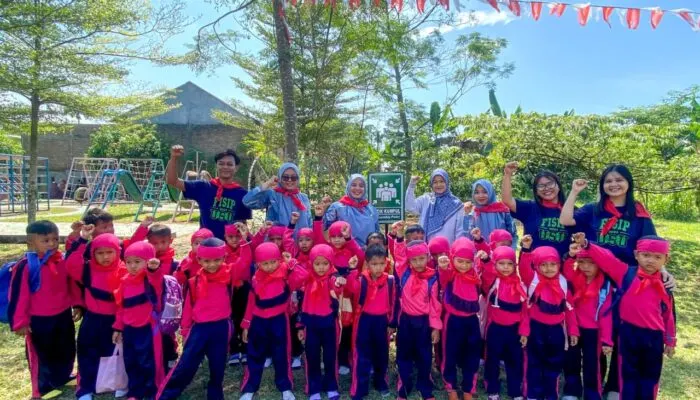
All children who participated in the simulation were given Earthquake Heroes scarves and pins as a token of appreciation, encouraging them to maintain their spirit as Earthquake Heroes, always ready when an earthquake strikes.
At the end of the activity, the entire team of lecturers, students, and children posed for a group photo in front of the gathering point while chanting "I'm on Earthquake Alert!"
https://www.waspada.id/medan/dosen-usu-masuk-dan-simulasi-mitigasi-bencana-gempa-untuk-anak/